
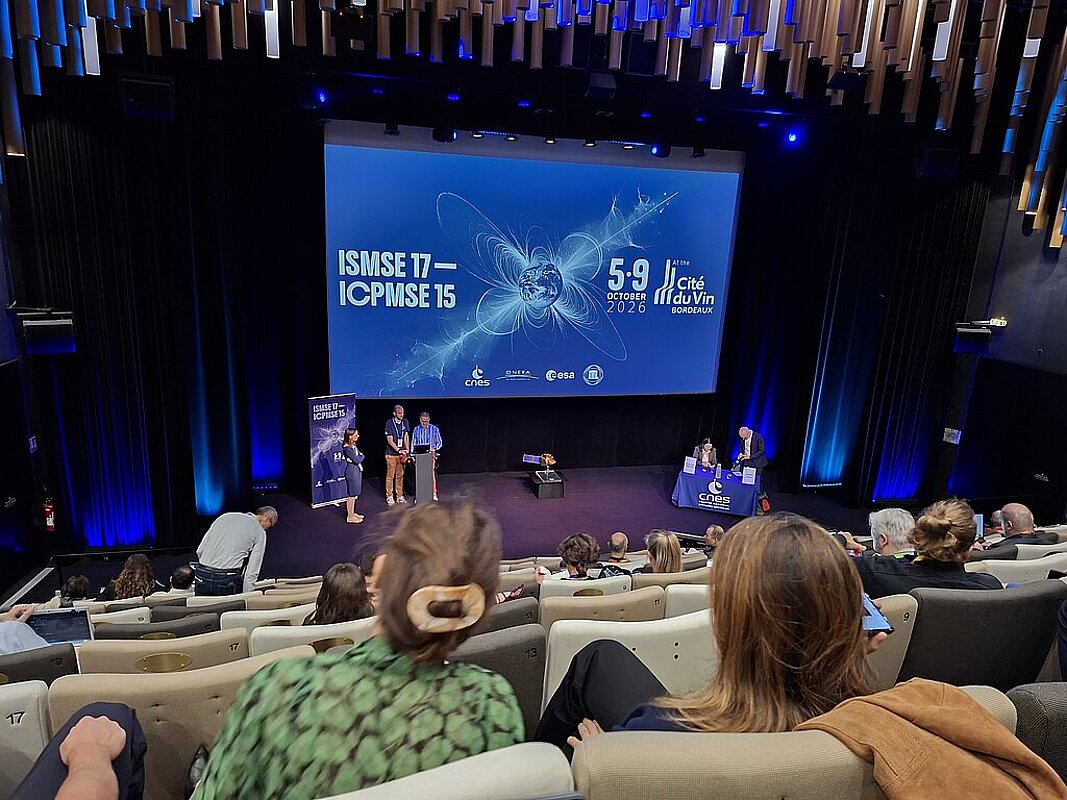
The IOM presented recent research on contamination caused by thruster exhaust during space missions at the 17th International Symposium on Materials in the Space Environment (ISMSE) and the 15th International Conference on Protection of Materials in the Space Environment (ICPMSE).
Organised by the French space agency CNES in cooperation with ESA, ONERA and the industrial partner ITL, the conference brought together international experts working on the behaviour and protection of materials exposed to the harsh conditions of space.
Topics ranged from space and extreme environments, ground-based testing and flight experiments to contamination control and materials and processes designed for clean space applications. Particular attention was given to the combined effects of atomic oxygen, radiation, UV exposure, thermal cycling, vacuum, micrometeoroids and space debris on material performance, durability and reliability.
Focus on thruster-induced contamination
During the “Plume Contamination” session, Dr. Christian Laube research scientist in the cross-section unit "Tools" at IOM presented recent findings on the formation and deposition of contaminants generated by thruster exhaust, known as plume-induced contamination.
These effects are particularly relevant during landing manoeuvres, docking operations and spacecraft attitude and orbit corrections. Deposits on sensitive surfaces can affect the performance and long-term stability of spacecraft components, making contamination an important issue for future space missions and extraterrestrial exploration.
The research presented by the IOM examined, among other aspects, potential contamination effects on Optical Solar Reflectors (OSRs) used on the Lunar I-Hab module, which is being developed as part of the international Lunar Gateway programme. The reflectors form part of the spacecraft’s thermal control system and help regulate its temperature.
By improving the understanding of contamination-related risks in space, the research contributes to the development of suitable materials and protective strategies for future lunar missions.