The Bunsen-Tagung is the central professional conference for physical chemistry in the German-speaking world. Each year, it brings together scientists from universities, research institutions, and industry to exchange the latest research findings, discuss new methods, and promote networking within the scientific community. Every year, the conference is dedicated to a clearly defined theme that highlights a specific area of physical chemistry. Both established research groups and early-career scientists have the opportunity to present their work in lecture sessions or poster presentations.
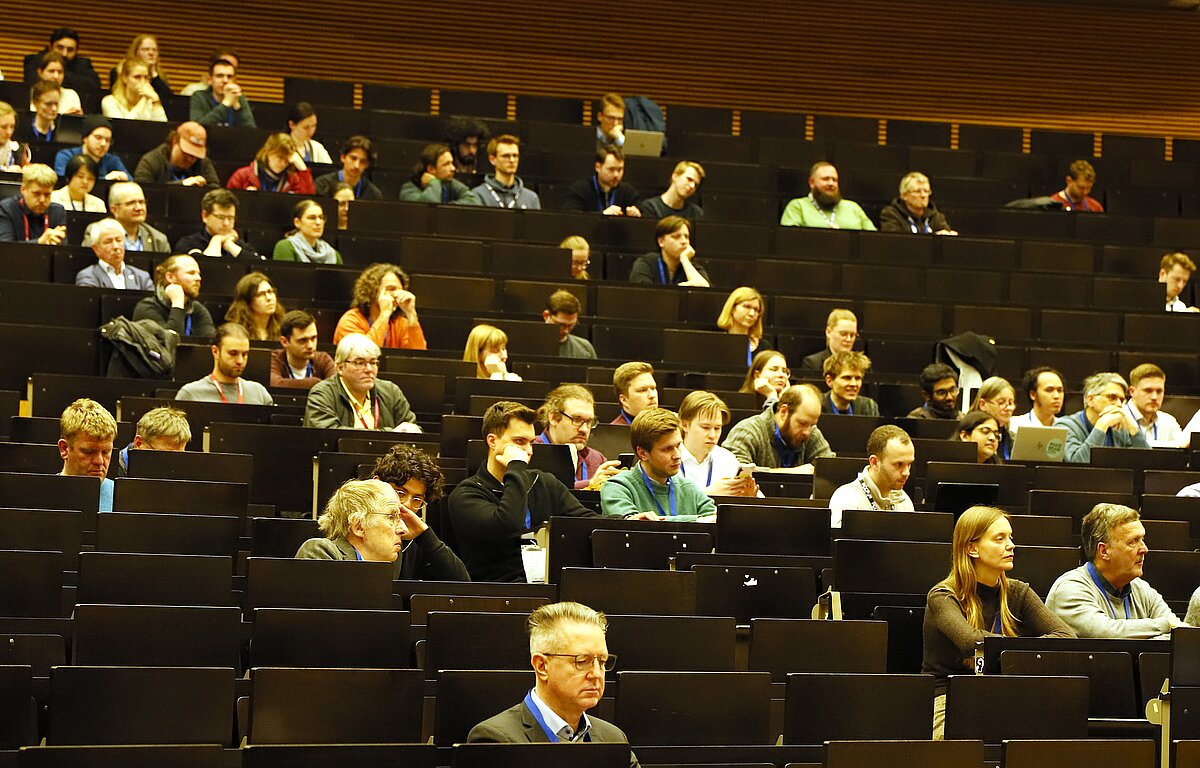
This year’s Bunsen-Tagung, held in Dresden from March 30 to April 1, was organized by the Technical University of Dresden (TUD), the Leibniz Institute of Polymer Research Dresden (IPF), and the Leibniz Institute of Surface Engineering (IOM). It focused on the topic “Properties and Processes under Confinement.” Spatial constraints in the micro- and nanoscale alter the physical and chemical properties of systems and influence molecular processes in numerous fields, ranging from nanophotonics and battery materials to sensor technology and enzymatic reactions. The aim of the conference was to bridge experiments and theory, discuss confinement effects from different perspectives, and thereby generate new insights for materials development, process design, and fundamental research.
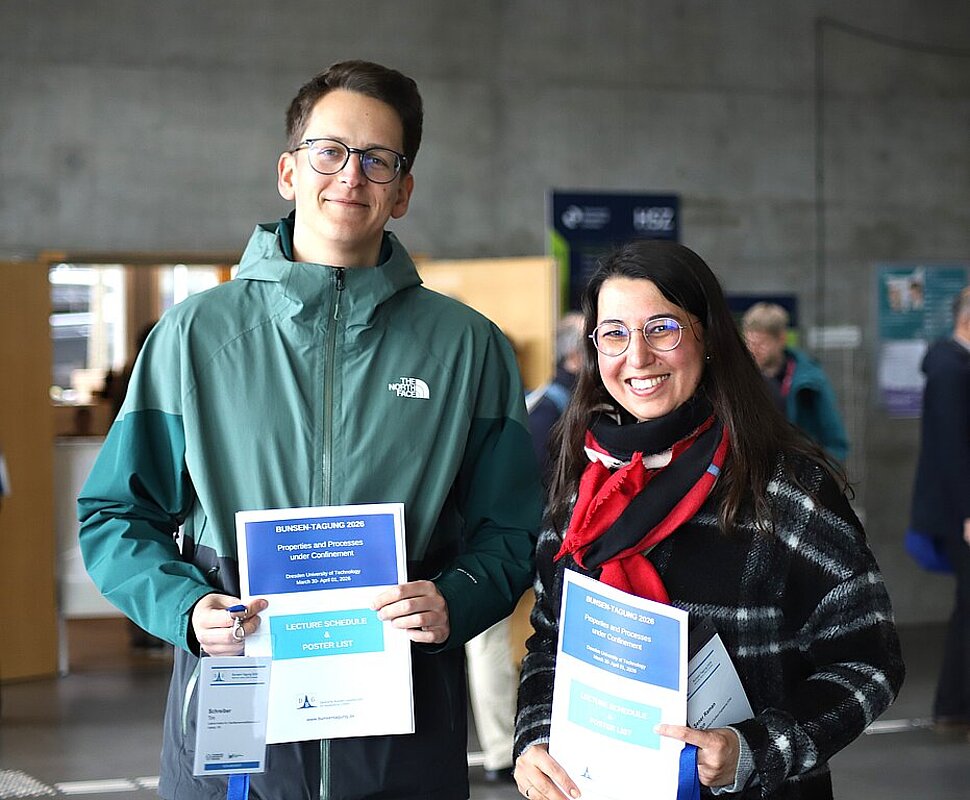
This year, the IOM was not only a co-organizer of the event but also actively represented with its own scientific contributions. Sessions were chaired, among others, by Prof. Dr. Andreas Fery and Prof. Dr. Inez Weidinger from Dresden, as well as by Prof. Dr. Benjamin Dietzek-Ivanšić, Scientific Director of the IOM and Vice President of the German Bunsen Society for Physical Chemistry (DBG). PD Dr. Axel Kahnt, a research associate in the cross-sectional unit “Tools” at the IOM, presented mechanistic insights into Fe²⁺ formation in FeCl/TRITON X-100 systems using pulse radiolysis. During the poster session, doctoral researchers Tuce Şener Raman and Tim Schreiber from the research area “Surfaces of Porous Membrane Filters” presented innovative approaches to surfaces, nanomaterials, and protein extraction. Dr. Stefan Zahn, co-head of the cross-sectional unit “Modeling and Simulation,” presented the molecular properties of deep eutectic solvents.
The Bunsen-Tagung 2026 enabled IOM participants to showcase their latest research internationally, intensify interdisciplinary exchange, and further expand their networks within the scientific community