

![[Translate to English:]](/fileadmin/_processed_/7/7/csm_15.04.2026_Rundgang_Innovationskongress-15_f851d3c418.jpg "[Translate to English:]")
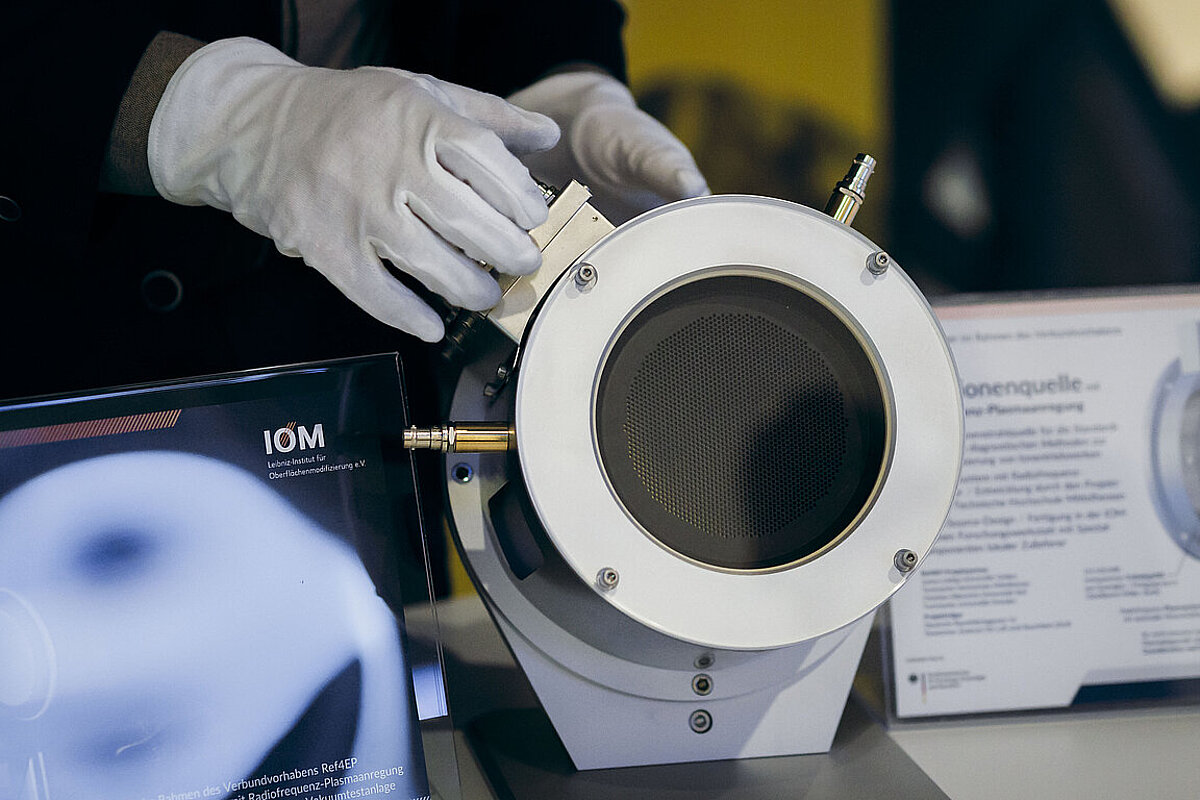
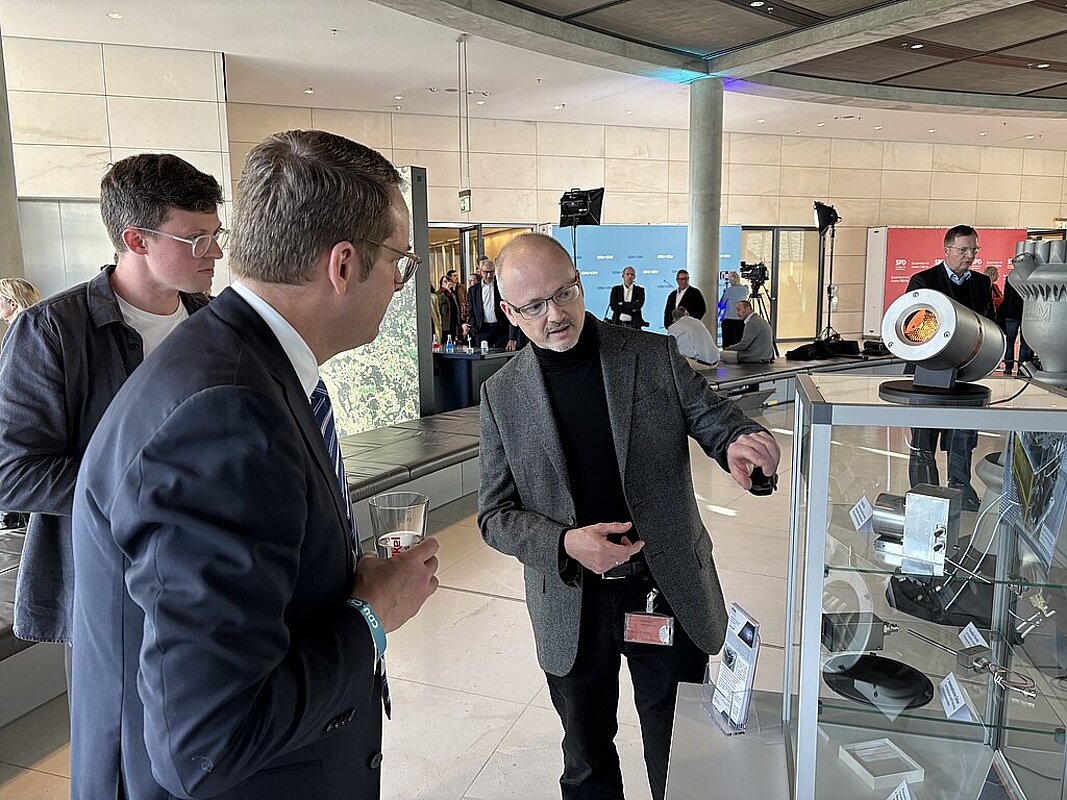

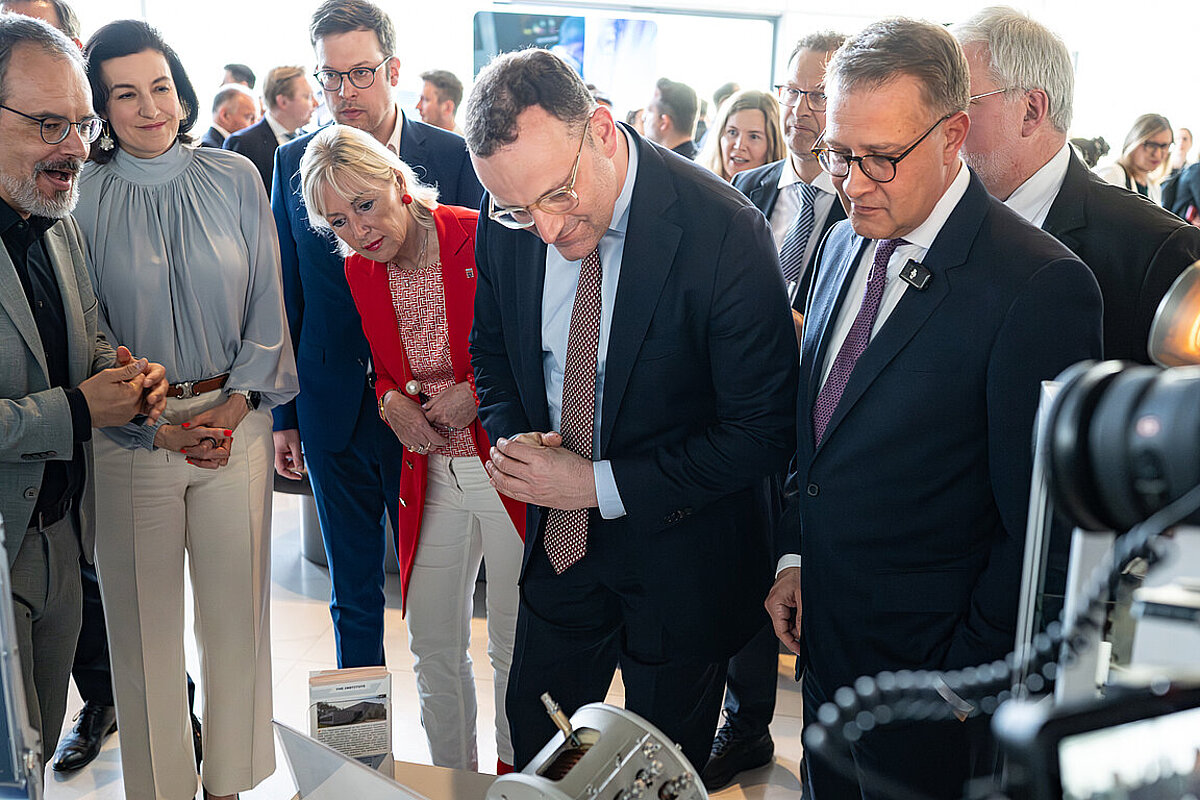
On April 15, 2026, the IOM presented itself at the CDU/CSU parliamentary group’s innovation congress held at the Reichstag building in Berlin, where it also represented the Leibniz Association. Dr. Daniel Spemann and Lukas Pietzonka from the cross-sectional unit “Tools” showcased selected exhibits from the IOM’s current research particularly in the fields of space technology and high-performance optics at their own booth in the accompanying exhibition. This provided an opportunity to showcase the IOM’s expertise in technology transfer and application-oriented research to a broad audience of experts and to engage in direct dialogue with them. The participants’ interest was correspondingly high.
A special moment arose during a personal conversation at the booth: The Federal Minister for Research, Technology, and Space (BMFTR), Dorothee Bär, as well as the Chairman of the CDU/CSU parliamentary group, Jens Spahn, who had opened the congress as host, learned firsthand about the IOM’s research work. In direct discussions with the scientists, current developments as well as challenges and prospects for technology transfer were discussed.
The Scientific Director of the IOM, Prof. Benjamin Dietzek-Ivanšić, was also on site and used the event specifically for professional exchange and networking with representatives from science, business, and politics.
The congress was titled “Taking Off with Innovation: More Freedom and Entrepreneurship in Science and Research” and focused on the central question of how Germany can strengthen its innovative capacity and more effectively translate research results into economic value creation.
In keynote speeches and high-profile panel discussions, representatives from academia, research, industry, startups, venture capital, and politics discussed suitable framework conditions for greater innovation and technological sovereignty. The focus was particularly on reducing bureaucratic hurdles, promoting key technologies, and introducing a Freedom of Innovation Act.