How can highly complex optical components be manufactured in the future with greater precision, flexibility, and environmental sustainability? This question is the focus of the new research project “Advanced Design and Atmospheric Pressure Manufacturing Technologies for Future Optical Instruments,” funded by the German Research Foundation (DFG).
The project brings together the expertise of leading research institutions from Germany and the Czech Republic. Participants include the “Laser based Micro- and Nanostructuring” research group at the IOM in Leipzig (Dr. Zimmer/ Dr. Ehrhardt), the “Chair of Ultra-Precision Surface Processing with Ions and Plasmas” at the Institute of Manufacturing Technology at Dresden University of Technology under the direction of Prof. Dr. Thomas Arnold, and the Group “Applied and Integrated Photonics “ at the Institute of Scientific Instruments” of the Czech Academy of Sciences in Brno under the direction of Dr. Mojmir Sery.
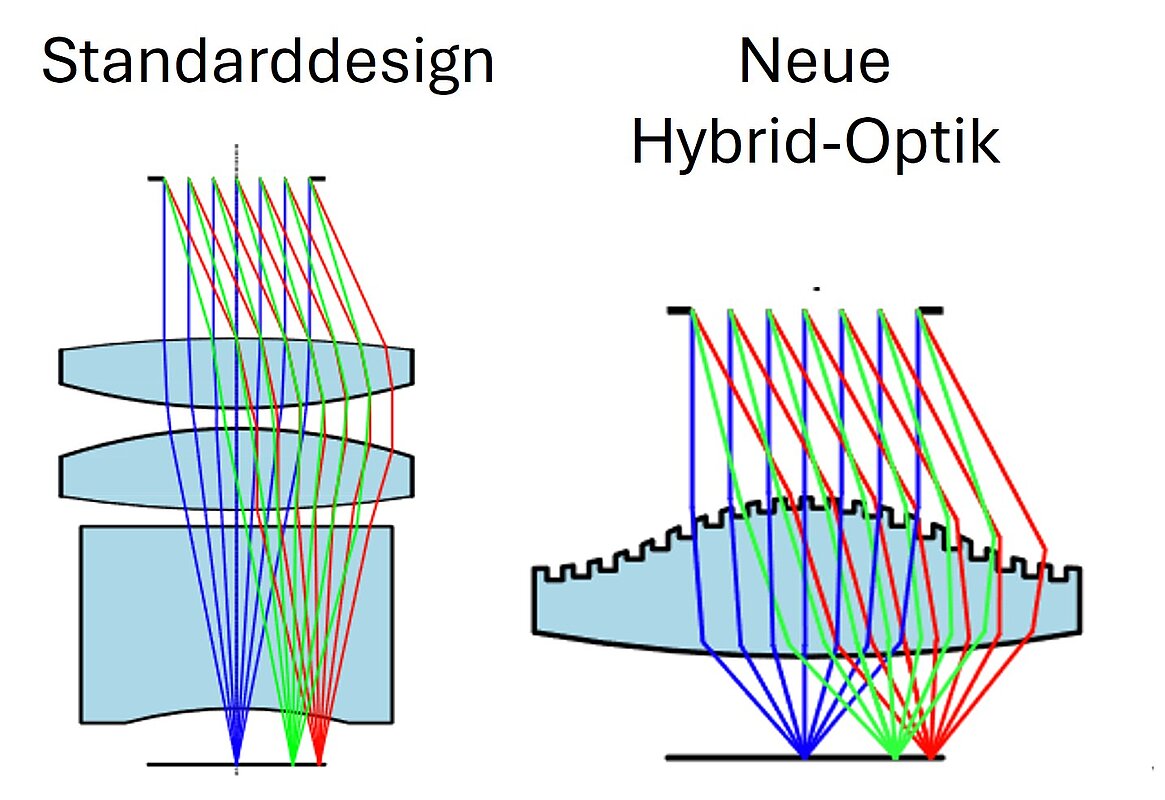
The focus of this international collaboration is the development of an innovative process chain for so-called hybrid optics. These combine classical lens or mirror surfaces with diffractive microstructures and are considered key components for future technologies, for example in micro-optics, modern sensor technology, and biomedicine.
Particular attention is being paid to sustainable and resource-efficient manufacturing. Using a combination of laser direct writing and atmospheric pressure plasma jet transfer (APPJ), complex structures are to be transferred directly onto curved surfaces without wet chemical processes and with significantly reduced energy consumption.
The complementary expertise of the partners enables coverage of the entire value chain from optical design through manufacturing to characterization. The goal is to establish the scientific foundations for a robust, industry-ready process chain that enables even small batch sizes to be produced economically and to the highest quality standards.